VSculpt · Chennai

Breast augmentation

Information about silicone implants, anatomical measurements, surgical options and the limitations and risks involved. Suitability and treatment decisions require an individual clinical assessment.

Is this you?

Common questions when considering surgery

Anatomy, risks, visibility, recovery and future surgery are important considerations before a treatment decision.

Illustrative portrait, not a patient or surgical outcome
The basics

What is breast augmentation?

A short, plain-English explanation of what the surgery actually is — and the two routes patients choose between.

What is breast augmentation?

A 3-minute introduction to the procedure, options, and what to expect.

Breast augmentation options

Fat transfer

  • Your own tissue, harvested from another area
  • Natural feel and appearance
  • Gradual results — some reabsorption over the first 6–12 months
  • Best for: subtle enhancement, natural texture preference
  • Note: VSculpt specialises in silicone implants

Silicone implants

  • Adds volume; implants may require future surgery
  • Multiple profile options (Low, Moderate, High, Ultra High)
  • Cohesive silicone gel inside an implant shell; device-specific regulatory status matters
  • Can be removed or replaced
  • Dimensions and suitability depend on anatomy and tissue cover

Most VSculpt patients choose cohesive silicone implants for predictable, lasting shape. Fat transfer is used on its own for very subtle change, or alongside implants to soften edges in slim patients.

Straight answers

Are implants safe?

Breast implants have recognised risks. Device choice, medical history, surgical factors and follow-up affect those risks; they should be discussed before treatment.

FDA approval & regulatory standards

Modern silicone breast implants have FDA approval and 25+ years of clinical data behind them. Every implant undergoes rigorous testing for integrity, stability and biocompatibility. Device model, regulatory status, serial number and warranty terms should be discussed for the specific implant.

Complication rates & realistic expectations

Serious complications are rare (1–2%). Common, manageable side effects include temporary swelling and sensitivity. Rupture risk at 10 years is around 1%. We monitor your results at regular follow-ups and stay transparent about exactly what to expect — before you decide, not after.

Regular monitoring & longevity

Implants don't require constant medical attention, but we recommend imaging (ultrasound or MRI) at 5–10 years to check implant integrity. Most implants last 15–20+ years. If rupture occurs, further surgery may be needed; warranty coverage depends on device terms and may exclude surgical costs.

Implant support and its limitations

Implant pocket design and tissue support are assessed during planning. No support technique eliminates capsular contracture, displacement, rupture or the possibility of revision.

Pre-operative assessment and surgical precautions

Medical history, examination, anaesthetic assessment, sterile technique and post-operative instructions form part of surgical care. Precautions do not remove all risk.

Still uneasy? That's reasonable.

Bring your list of worries to the consultation. You'll get direct answers and the actual numbers — including when we think surgery isn't right for you.

Appointments

Clinical assessment is required before treatment decisions.

Implant selection

Base width, volume and profile

Implant dimensions are considered alongside chest width, tissue cover, skin elasticity and existing asymmetry. Profile alone does not determine appearance.

base width (schematic)
Implant geometry teaching diagram — schematic, not to scale. This is not a breast photograph, an individual simulation or a prediction of a surgical result.
LowUltra high

Moderate profile

An intermediate projection-to-width relationship. The label does not imply that it is suitable for most people or predict how an individual breast will look.

Base width
The implant footprint is assessed against the breast base and chest wall. A narrow chest does not automatically make a high-profile implant suitable.
Projection and volume
Profile describes forward projection relative to base width. At the same volume, dimensions can differ between profiles and manufacturers. Cup sizes are not standardised implant measurements.
Tissue limits
Skin stretch, tissue thickness, fold position and muscle coverage may limit dimensions. Excessive size can increase tissue strain, visible edges or displacement. No profile guarantees symmetry, cleavage or a particular appearance.
Anatomical planning

Measurements and implant support

Clinical examination considers dimensions, tissue characteristics and placement. These concepts do not establish superiority or predict an individual outcome.

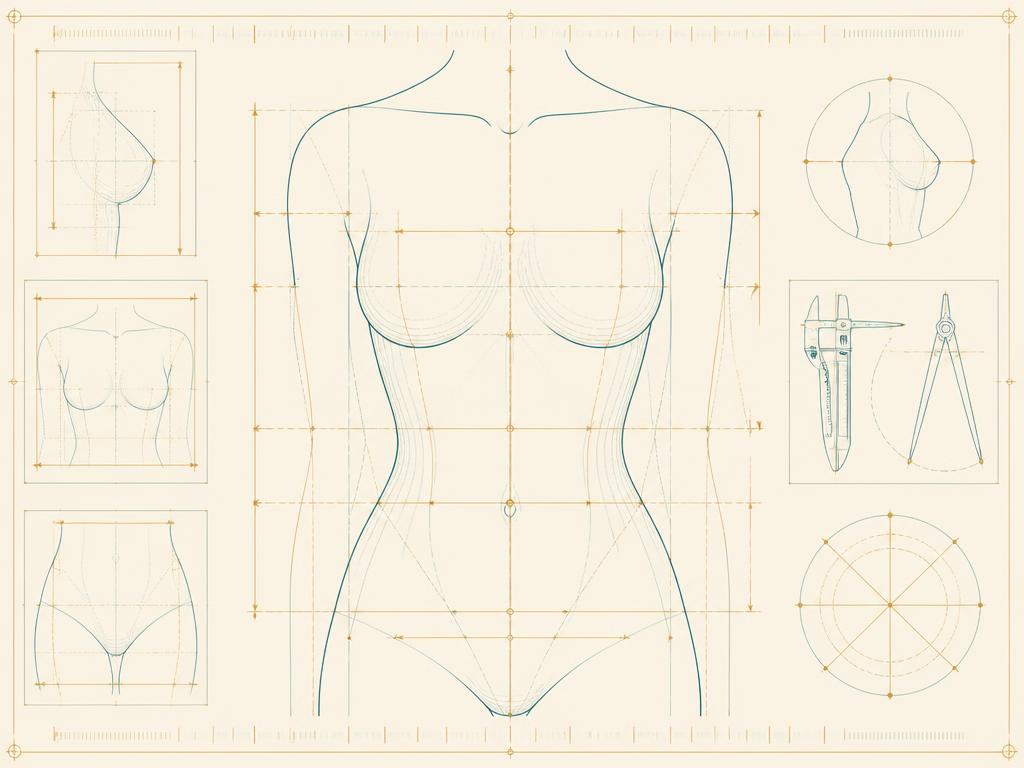
General anatomical teaching sketch showing breast base, chest wall and measurement landmarks
General anatomical teaching illustration, not to scale. The lines show measurement concepts, not an individual surgical plan or a predicted result.
Breast base width
The width of the breast footprint is considered against the implant diameter and chest-wall shape.
Nipple-to-fold distance
The distance to the inframammary fold is considered with skin stretch, fold position and existing asymmetry.
Tissue cover and pocket
Skin, breast tissue and muscle thickness influence placement options and the risk of visible edges or rippling.
Support and long-term change
Pocket design and tissue support are part of surgical planning. No support technique eliminates displacement, contracture or the possibility of future revision.
Anatomy & limitations

What implant dimensions can — and cannot — tell you

Bodies and healing vary. This information explains the factors involved without presenting patient examples or predicting an individual result.

Anatomical variation

Breast base width, chest-wall shape, nipple position, fold level and existing volume may differ between the two sides. Skin elasticity and tissue thickness influence implant coverage. An implant cannot make every chest shape or asymmetry identical, and some asymmetry can persist after surgery.

Base width and profile choices

Base width is the implant footprint; profile describes projection relative to that footprint. Volume in cc is a separate measurement. Two implants with the same volume can have different dimensions. Manufacturer sizing charts and clinical measurements are needed; a profile label or bra cup preference alone is not a treatment plan.

Real limitations

Implants add volume but do not reliably correct all skin excess, breast droop, chest-wall differences or nipple asymmetry. A lift, staged procedure, another approach or no surgery may be considered. Cleavage, softness, symmetry and a specific cup size cannot be guaranteed. Pregnancy, weight changes and ageing can alter breast tissue later.

Scars and tissue changes

All surgical incisions leave scars. Their visibility, colour, width and sensitivity vary with skin characteristics, incision location and healing. Scars may remain visible or become raised. Tissue stretch and contour changes can persist even after implant removal; the original appearance is not assured.

Risks and monitoring

Risks include bleeding, infection, fluid collection, capsular contracture, rupture, rippling, displacement, asymmetry, altered sensation and anaesthesia-related complications. Breast implant-associated malignancies and persistent systemic symptoms should also be discussed with a clinician. New swelling, a lump, persistent pain or an unexpected change needs medical review.

Future revision or removal

Breast implants are not lifetime devices. Further surgery may be needed for rupture, contracture, displacement, tissue changes or a change in preference. Revision or removal carries its own risks, costs and recovery, and can involve implant replacement, capsule treatment or a lift. Follow-up and device-specific monitoring remain important.

Recovery

Recovery and follow-up

General recovery guidance, not individual activity clearance. Pain, swelling and healing vary; follow the instructions given by your treating team.

Week by week

Illustrative discomfort level

6/10

Off work

What you CAN do
Walk around the house, shower with help by day 3–4, gentle elbow movement
Still off-limits
Lifting, driving, raising arms overhead
Swelling & bruising
Peak swelling and bruising, chest feels tight and high
Practical cost
Plan for full-time help at home for 4–5 days

When can I do this again?

Return to work (desk)
Week 1–2
Driving
Week 2–3
Air travel
Week 2–3
Intimate activity
Week 2–4
Swimming
Week 3–4
Cardio exercise
Week 4
Return to work (physical)
Week 4–6
Non-contact sport
Week 8
Gym / weightlifting
Week 8–10
High-impact activity
Week 8–10
Contact sport
Week 12

Pain management

  • Long-acting local anaesthetic in theatre, so pain control is considered as part of the anaesthetic plan.
  • Scheduled paracetamol plus a short anti-inflammatory course — opioids are the exception, not the routine.
  • Muscle relaxant for the first 3–4 nights if you have submuscular placement and chest tightness.
  • Most patients rate day 2–3 at 4–5/10 and are off everything but paracetamol by the end of week one.

Preventing complications

  • Single-dose IV antibiotics, no-touch insertion funnel and pocket irrigation as infection precautions; infection can still occur.
  • Early gentle arm movement plus hydration to reduce clot risk — no bed rest.
  • Compression bra day and night for 6 weeks so the implant stays in the planned pocket.
  • No heavy chest work before week 8; scar therapy from week 3 to keep lines flat and pale.
  • Contact the treating team for unexpected symptoms; urgent symptoms require prompt medical assessment.

Your follow-up plan

Day 1
Dressing check and movement assessment
Week 1
Sutures reviewed, activity clearance for desk work
Week 6
Position and shape check, gym clearance
Month 6
Final shape assessment and photographs
Yearly
Annual review with your surgeon, imaging from years 5–6

Recovery support provided

  • Post-operative contact arrangements
  • Detailed written recovery guide
  • Video tutorials for exercises and care
  • Check-in appointments at 1 week, 2 weeks, 6 weeks, 3 months and 1 year
  • Prescription pain management protocol
  • Activity modification checklist
Consultation preparation

Questions to consider before a consultation

Six questions about preferences and concerns. This is not a diagnosis, candidacy assessment or implant recommendation.

Step 1 of 6

~90 sec

What's your primary goal?

Consultation, surgery and follow-up

Four phases, mapped week by week

An overview of planning, preparation, surgery and follow-up. Timing and activity clearance depend on clinical assessment.

Consultation & planning

  • Medical history and clinical assessment
  • Anatomical measurements and implant geometry education
  • Implant options: cohesive silicone profiles and hybrid fat grafting
  • Breast base width, tissue cover and profile discussion
  • Medical history review and scar placement discussion
Appointments

Your first consultation (2 min)

The full week-by-week recovery plan — discomfort levels, activity clearances, pain management and follow-up — is in the Recovery section below.

What you should know

The honest version — implants, risks, scars and price

Information about implant materials, complications, incision locations and costs to discuss before making a treatment decision.

✓ Material
Silicone shell containing cohesive gel
✓ Tissue coverage
Visible edges and rippling can occur
✓ Longevity
Not lifetime devices; revision may be needed
✓ Safety
FDA approved, decades of published track record
✓ Dimensions
Base width, projection and volume vary by device
✓ Cost
₹3,50,000 – ₹4,50,000 depending on size & profile

Silicone implant material: a silicone shell contains cohesive gel. Feel and visibility depend on tissue cover and placement; edges and rippling remain possible.

Cohesive gel: the gel has form-stable properties, but rupture and gel migration can occur. Suspected rupture requires clinical assessment and may need imaging or further surgery.

Monitoring and warranty: device-specific imaging and follow-up should be agreed with a clinician. Manufacturer warranties vary and do not guarantee a complication-free course or cover all revision costs.

Questions, answered

Frequently asked questions

General information about implants, surgery, risks, recovery and appointments. Individual advice requires clinical assessment.

Implants & sizing

Surgery & recovery

Risks & complications

Cost & financing

Lifestyle & long term

Consultation & next steps

Private consultation

Contact and appointments

Ask them before you commit to anything. Second opinions are welcome, and there's no pressure at any point.

Clinical assessment is required before treatment decisions.